Need water extraction & structural drying services in Dayton?
Request an estimate and tell us what happened. A local provider in our network can follow up with questions, timing and a written quote.
No obligation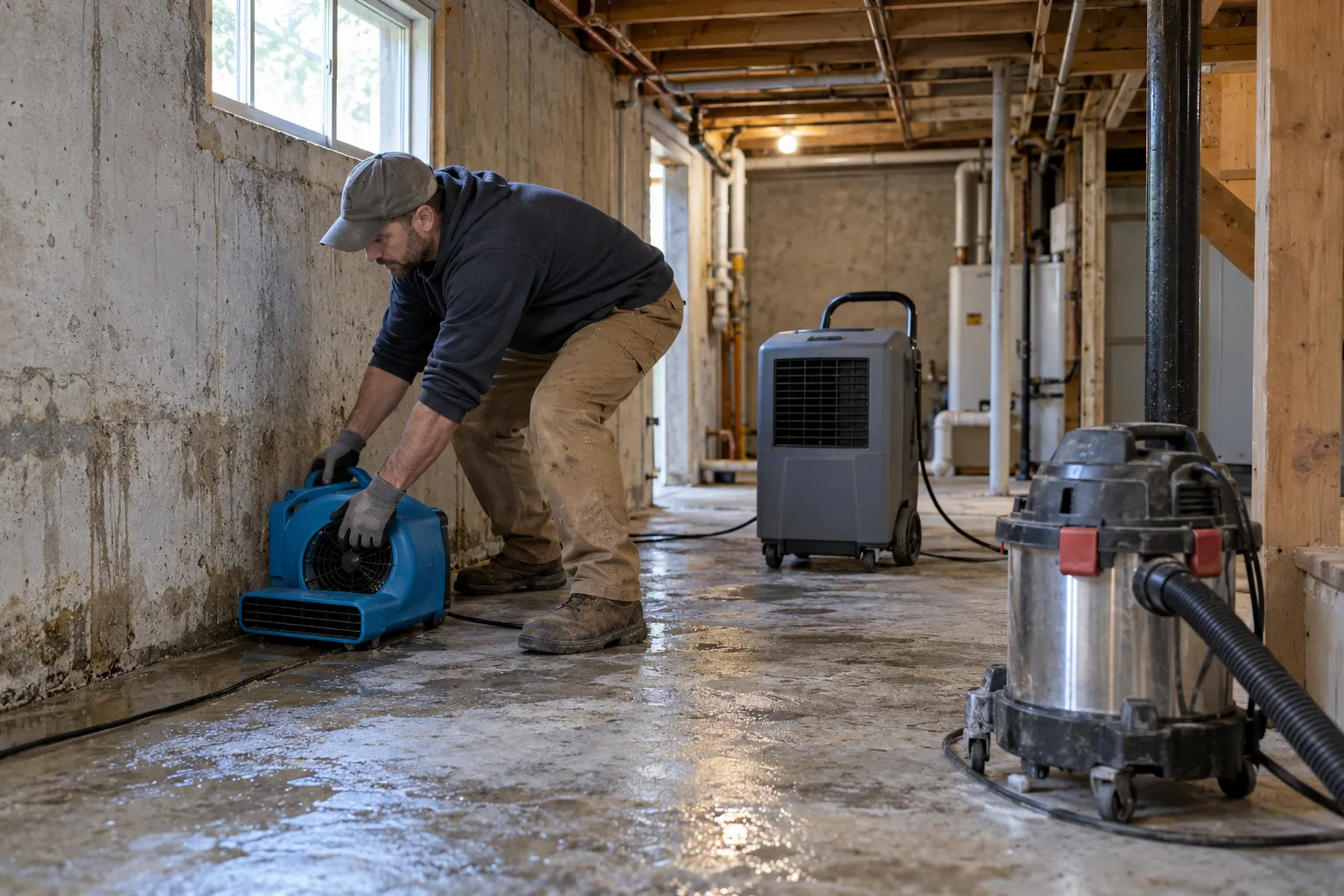
Request an estimate today
Water extraction is the first job after a leak, flood or storm. A provider uses pumps and wet vacuums to pull standing water out of floors, carpet and low spaces. Structural drying comes next. It dries the wood, drywall and concrete that still hold moisture after the puddles are gone.
Arthuroccasion Restoration is a referral service. We do not do the work. We connect homeowners in Dayton with independent providers in our network, and we encourage you to compare written quotes before you sign. Price depends on how much water, how long it sat, and what it soaked. This page explains each step, what drives cost, and what to ask.
If water is pooled on the floor or in the basement, the main goal is simple. Get it out, then get the structure dry. Emergency water damage repair usually begins with those two steps, and many providers can respond quickly when you reach out.
First, if it is safe, shut off the water source. Stay out of rooms where water touches outlets or the electrical panel.
Wet materials get worse as time passes. Drywall softens. Wood swells. Mold can start to grow in a couple of days in warm, damp air. Each of those problems adds work, and added work adds cost.
A quick start often means a smaller job. That is the budget case for acting early, even if you only gather quotes first.
A provider starts by finding where the water is and how deep it runs. Then they remove it with submersible pumps for deep water and truck-mounted or portable extractors for carpet and floors.
For a flooded basement cleanup, the pump often goes in the sump pit or low corner. Once the water level drops, the provider pulls up soaked padding and checks what can be saved.
Extraction does not finish the job. Water soaks into studs, subfloors, drywall and concrete. Structural drying pulls that hidden moisture out.
Providers place air movers to push air across surfaces and dehumidifiers to pull moisture from the air. They read moisture meters at set points and note the numbers. When readings drop to normal for your materials, drying is done.
Where you live changes how this work plays out. Here is what to expect through the year.
Melting snow and heavy rain push groundwater against foundations. Basements take on water, and sump pumps can fail under the load. Providers get busy, so book early and ask about scheduling.
Severe thunderstorms and hail can break roofs and send water inside. Hot, humid air also slows drying, so equipment may run longer. Mold risk rises in the same weather.
Cold snaps can split pipes inside walls. Frozen ground can also keep outside water from draining away. Indoor heat helps drying, but providers may need to open walls to reach wet framing.
Most structural drying runs about three to five days. Large floods, thick framing and humid weather can stretch that. Older frame houses with many layers of material may also take longer.
Ask the provider how they will track progress. Good drying plans include daily or regular moisture readings, not a guess.
Small steps can limit the damage and keep your costs steady.
Two quotes for the same room can differ a lot. One may list equipment days and monitoring. Another may give a single number. Compare written quotes line by line. Ask before you sign, and keep every version.
Some policies may cover sudden damage, so check your policy. Providers can often help document damage for a claim.
A few plain questions tell you a lot.
A solid provider explains the plan in simple words. They name the equipment, the likely number of days, and what would change the price. They put it in writing and tell you what they will document.
Be careful if someone asks for full payment up front, will not put numbers in writing, or pushes you to tear out everything without readings. Vague answers about drying time are another warning sign. Take your time and compare.
Pumps and wet vacuums pull water from floors, carpet and basements so surfaces can begin to dry.
Meters find hidden damp spots in walls, floors and framing.
Fans and dehumidifiers pull moisture out of wet materials and the air around them.
Providers take repeat readings to show when wood, drywall and concrete are back to normal.
These are typical U.S. ranges. Real prices vary by water depth, square footage, materials and local rates. Treat them as a guide and get a written quote before work starts.
| Item | Typical range | Notes |
|---|---|---|
| Water extraction, small area | $300 – $1,000 | One room, shallow water, quick start. |
| Flooded basement extraction | $1,000 – $4,000 | Depends on depth, pumping time and cleanup. |
| Air movers and dehumidifiers | $200 – $600 per day | Cost rises with number of units and days. |
| Moisture monitoring visits | $100 – $300 | Some providers include this in the equipment price. |
| Wet drywall or insulation removal | $500 – $2,000 per room | Needed when materials cannot dry in place. |
| Whole-job structural drying | $1,500 – $6,000+ | Large floods and slow weather push toward the top. |
Shut off water if you can and stay away from electrical hazards.
Tell us about the water and a provider in our network will respond.
Look at scope, equipment days and monitoring before you choose a provider.
The provider removes the water, sets up equipment and tracks readings until dry.
Compare scope, equipment days and monitoring so you can see what drives each price.
Providers in our network do the work, so you know who is on site.
Spring flooding, summer humidity and winter frost all affect timing and price.
Request an estimate, read the details and decide at your own pace.
Request an estimate and tell us what happened. A local provider in our network can follow up with questions, timing and a written quote.
No obligationMost jobs take about three to five days. Deep flooding, thick framing and humid summer weather can add time. Ask the provider how they will track moisture readings so you can see progress.
For a small, shallow spill, maybe. For deeper water or soaked walls, home fans often cannot reach hidden moisture. Ask a provider for a quote so you can weigh the cost against the risk of mold.
Some policies may cover sudden damage, such as a burst pipe, but not slow leaks or some floods. Check your policy. Providers can often help document damage for a claim.
Request an estimate and tell us what happened. A local provider in our network can follow up with questions, timing and a written quote.
No obligation