Need water damage restoration in Dayton?
Request an estimate and tell us what happened. A local provider in our network can follow up with questions, timing and a written quote.
No obligation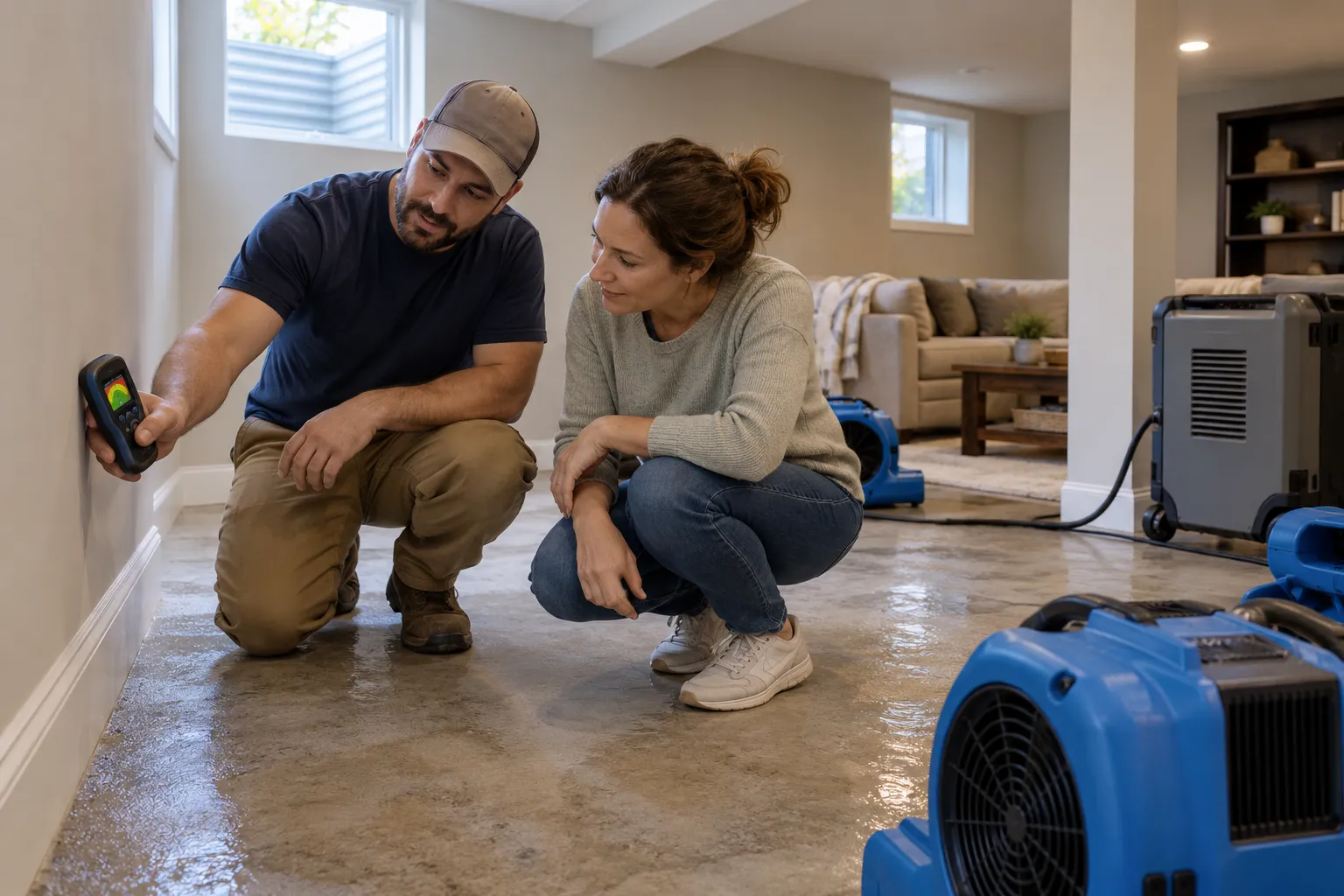
Request an estimate from local providers
Arthuroccasion Restoration is a referral service. We connect homeowners in Dayton, OH with independent providers in our network who handle water damage restoration. We do not do the work ourselves. The provider you choose does.
Restoration means stopping the source, removing water, drying the structure, cleaning, and repairing what was damaged. Price depends on how much water, how long it sat, and what it touched. Season matters too. Spring flooding, summer storms and winter pipe breaks all shape how busy providers are. Compare written quotes before you sign, and ask each provider what is included. Costs vary by job, so a written quote is the only reliable number. You can send a request through arthuroccasion.living and providers in the Miami Valley area may reach out to you.
Stay safe first. If water is near outlets, the panel or appliances, stay out and shut off power only if you can reach the switch dry. Stop the source if you can. Turn off the main water valve for a broken pipe.
Then take photos and short videos of everything wet. These help with a claim and help providers price the job.
Wet materials get worse as time passes. Drywall softens. Carpet pad holds water. Mold can begin to grow in a day or two in warm, damp air. Every added step, like tearing out more wall, adds cost.
So a quick start often means a smaller bill. Many providers can respond quickly, but availability varies. Request a callback to check provider availability, or send a request and let providers reach out.
Season shapes timing, and timing shapes price. Here is what to expect in our region.
Melting snow and heavy rain push water into full basements. Sump pumps run hard, and some fail. Providers get busy, so ask for a realistic start window in writing.
Severe thunderstorms and hail can damage roofs and let rain inside. Hot, humid air slows drying and speeds up mold. Expect providers to use more drying equipment on humid days.
Deep frost can split pipes inside walls. The break may stay hidden until a thaw. Older frame houses and many bungalows have pipes in exterior walls, so check them in a cold snap.
Clean gutters, test the sump pump and check the window wells. A little prep before the freeze costs far less than cleanup after.
A full job often has these parts:
Some providers handle repairs. Others only dry and clean. Ask which parts are in the quote.
Clean water comes from a supply line or rain. It is the simplest to handle. Gray water comes from a washer or dishwasher and needs more care. Black water comes from sewage or river flooding. It is unsafe, and porous items often must be thrown out.
The water type affects labor, safety gear and total cost. Flood water in a basement is usually treated as the highest-risk type.
Some policies may cover sudden damage, like a burst pipe. Many do not cover slow leaks or surface flooding. Check your policy, and ask your insurer about flood coverage and deductibles.
Providers can often help document damage for a claim. Keep photos, receipts and written quotes together. Do not assume anything is covered until your insurer says so.
Get at least two or three quotes if the situation allows. Ask each provider to put the same items in writing. Then you can compare like with like instead of guessing which number is fair.
A lower number is not always a better deal. It may leave out drying checks or repairs.
Use these questions, and listen for clear answers.
After drying, the repairs begin. Plan for drywall, insulation, flooring and paint. Keep the final moisture readings. Run a dehumidifier if the air still feels damp, and watch for musty smells in the weeks after.
If you want to see what local providers would charge, start with a request.
Providers help find where the water came from and stop it so the damage does not keep spreading.
Pumps and vacuums pull standing water from floors and basements before drying begins.
Fans and dehumidifiers dry the structure, and moisture readings show whether it is truly dry.
Cleaning, removal of ruined materials, and rebuilding steps depend on the provider and the quote.
Prices vary a lot by region, water type and square footage. These are typical U.S. ranges only. Your job may cost more or less, so always get a written quote that lists each item.
| Item | Typical range | Notes |
|---|---|---|
| Small leak cleanup, one room | $400 – $1,500 | Clean water, caught early |
| Water removal, finished basement | $1,000 – $4,000 | Depends on depth and area |
| Structural drying equipment | $800 – $3,000 | Often priced per day |
| Carpet and pad removal | $500 – $2,500 | Varies by room size |
| Drywall removal and replacement | $1,000 – $4,000 | Higher if insulation is wet |
| Mold testing or treatment | $500 – $6,000 | Depends on spread |
Tell us about the damage and your home so providers can understand the job.
Review scope, equipment, timing and price from each provider side by side.
Confirm drying checks, licensing, insurance and how extra work gets approved.
The provider you choose handles the work and shows you the final readings.
We encourage side-by-side written quotes so you can see what is included before you agree.
Providers in our network know area homes, weather and basements.
We are a referral service. Independent providers do the work, not us.
Requesting an estimate does not commit you to hire anyone.
Request an estimate and tell us what happened. A local provider in our network can follow up with questions, timing and a written quote.
No obligationTypical U.S. jobs range from a few hundred dollars for a small leak to many thousands for a flooded basement. Size, water type and drying time drive the price. Get a written quote.
Some policies may cover sudden damage, like a burst pipe. Slow leaks and flooding are often excluded. Check your policy and ask your insurer. Providers can often help document damage.
Drying often takes several days, depending on materials, humidity and how much water got in. A provider should check moisture readings to confirm the home is dry.
Request an estimate and tell us what happened. A local provider in our network can follow up with questions, timing and a written quote.
No obligation